Delve into the world of negotiating cost-effective vendor contracts with this comprehensive guide. From understanding key components to mastering negotiation techniques, this article provides valuable insights for optimizing vendor agreements.
Learn how to navigate the complexities of vendor contracts and unlock strategies for securing favorable terms that benefit your business.
Understanding Vendor Contracts
When entering into a business relationship with a vendor, it is crucial to have a clear understanding of the vendor contract to ensure that both parties are on the same page. Here are key components of a vendor contract, different types of vendor contracts, the importance of clear terms and conditions, and examples of common clauses found in vendor contracts.
Key Components of a Vendor Contract
- Identification of the parties involved
- Description of the goods or services being provided
- Pricing and payment terms
- Delivery schedule and performance expectations
- Warranties and guarantees
Types of Vendor Contracts
- One-time contracts for specific projects
- Recurring contracts for ongoing services
- Master service agreements for long-term partnerships
Importance of Clear Terms and Conditions
Having clear terms and conditions in a vendor contract helps prevent misunderstandings and disputes. It ensures that both parties are aware of their rights and obligations, leading to a smoother business relationship.
Common Clauses in Vendor Contracts
- Confidentiality clause to protect sensitive information
- Indemnification clause to allocate liability in case of damages or losses
- Termination clause outlining conditions for ending the contract
- Dispute resolution clause to establish a process for resolving conflicts
Preparing for Negotiations
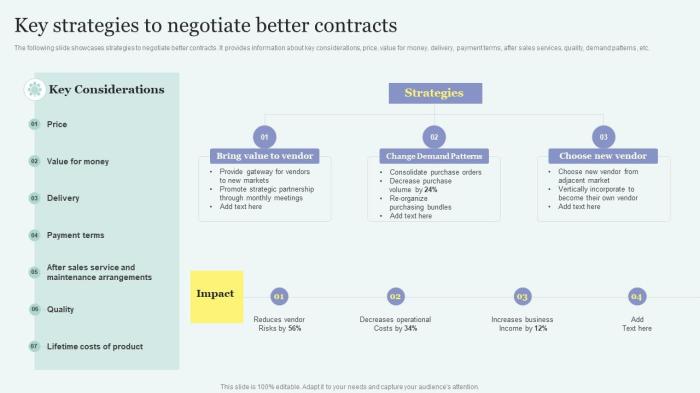
When it comes to negotiating vendor contracts, proper preparation is key to achieving a successful outcome. Before entering into negotiations, it is important to research the vendor, set clear goals, determine budget constraints, and create a solid negotiation plan.
Researching Vendor Backgrounds
Researching the vendor's background is crucial in understanding their reputation, reliability, and past performance. Look into their track record, reviews from other clients, and any relevant certifications or awards they may have.
Setting Negotiation Goals
Before starting negotiations, it is essential to establish clear goals and priorities. Determine what terms are non-negotiable and where there is room for flexibility. Setting specific goals will help guide the negotiation process and ensure you stay on track.
Determining Budget Constraints and Priorities
Understanding your budget constraints and priorities is essential in negotiating cost-effective vendor contracts. Identify what aspects of the contract are most important to your organization and where you can potentially make trade-offs to stay within budget.
Creating a Negotiation Plan
Developing a negotiation plan is critical for achieving a successful outcome. Artikel your objectives, desired outcomes, and potential strategies for reaching a mutually beneficial agreement. Consider different scenarios and prepare responses in advance to be better prepared during negotiations.
Negotiation Techniques
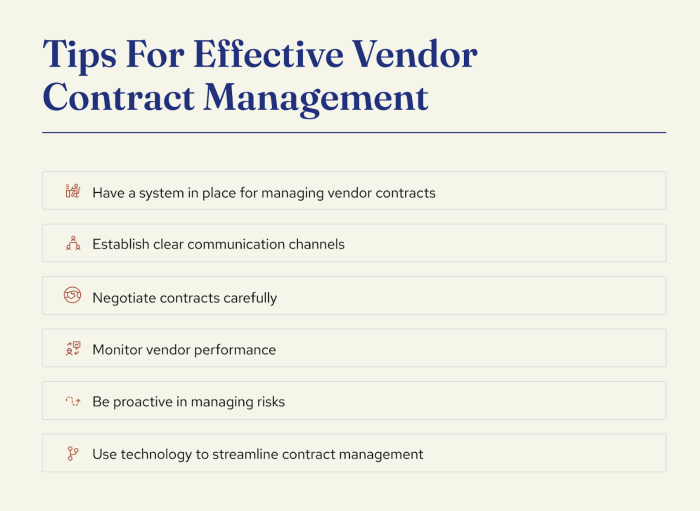
Effective negotiation techniques are crucial when it comes to securing cost-effective vendor contracts. During negotiations, it is essential to communicate clearly, actively listen, understand the vendor's perspective, and maintain a professional yet assertive demeanor. Successful negotiation tactics can make a significant difference in reaching a favorable agreement.
Effective Communication Strategies
Effective communication is key during vendor contract negotiations. It is important to clearly articulate your needs, expectations, and limitations. Listening actively to the vendor's responses and feedback can help in understanding their concerns and constraints
Tips for Active Listening and Understanding
Active listening involves paying full attention to what the vendor is saying, without interrupting or formulating responses prematurely. Understanding the vendor's perspective requires empathy and the ability to see the situation from their point of view. By actively listening and understanding, you can identify common ground and areas for compromise, ultimately leading to a more successful negotiation process.
Maintaining a Professional Yet Assertive Demeanor
Maintaining a professional demeanor during negotiations is essential to building trust and credibility. Being assertive, while remaining respectful, can help you convey your priorities and non-negotiables clearly. It is important to stay composed, avoid emotional reactions, and focus on the facts and objectives at hand.
A professional yet assertive approach can demonstrate confidence and increase the likelihood of achieving a favorable outcome.
Successful Negotiation Tactics
Prepare thoroughly
Conduct research on market rates, vendor backgrounds, and industry standards to have a strong foundation for negotiation.
Set clear objectives
Define your goals, priorities, and alternatives before entering into negotiations to stay focused and avoid distractions.
Create win-win solutions
Look for opportunities to create mutually beneficial agreements that address both your needs and the vendor's interests.
Use leverage wisely
Identify points of leverage, such as alternative vendors or unique requirements, to strengthen your position and negotiate from a place of strength.
Be willing to walk away
Sometimes, the best negotiation tactic is knowing when to walk away from a deal that does not meet your requirements or align with your objectives.
Cost-Cutting Strategies
When negotiating vendor contracts, it is crucial to identify areas where costs can be reduced to maximize cost-effectiveness. By implementing cost-cutting strategies, businesses can save money and improve their bottom line.
Benefits of Long-Term Contracts for Cost-Effectiveness
Entering into long-term contracts with vendors can offer several benefits in terms of cost-effectiveness. Not only do long-term contracts provide stability and predictability in pricing, but they also often come with discounts or incentives for commitment over an extended period.
Leveraging Volume Discounts or Bundling Services
One effective way to negotiate better pricing terms is by leveraging volume discounts or bundling services. By committing to larger quantities of goods or services, businesses can often secure lower prices per unit or receive additional services at a discounted rate.
Creative Ways to Negotiate Better Pricing Terms
- Consider proposing a revenue-sharing agreement where the vendor receives a percentage of sales in exchange for lower prices.
- Explore alternative payment structures, such as milestone payments or performance-based incentives, to align costs with value delivered.
- Discuss the possibility of exclusivity or preferred vendor status in exchange for more favorable pricing terms.
- Look for opportunities to collaborate with other businesses to increase purchasing power and negotiate better rates collectively.
Final Thoughts
In conclusion, mastering the art of negotiating cost-effective vendor contracts is crucial for maximizing value and minimizing expenses. By implementing the tips and techniques discussed, you can enhance your contract negotiation skills and drive better outcomes for your business.
FAQ Insights
How can I effectively research vendor backgrounds before negotiations?
Before negotiations, conduct thorough research on the vendor's reputation, past contracts, and financial stability to inform your bargaining position.
What are the benefits of long-term contracts for cost-effectiveness?
Long-term contracts often secure lower pricing and better terms, providing stability and cost savings for your business over time.
How can I leverage volume discounts or bundling services to cut costs?
Negotiate with vendors for discounts based on the volume of services or products purchased, or bundle multiple services together for a better overall deal.